

Innovation has become one of the maritime industry's favourite buzzwords. Every conference discusses alternative fuels, autonomous vessels, artificial intelligence, digital twins and smart shipyards. Companies proudly announce new technologies and increasingly sophisticated software tools. Yet despite these advances, truly transformative innovation often remains frustratingly slow.
The reason is surprisingly simple.
Technology is advancing faster than collaboration.
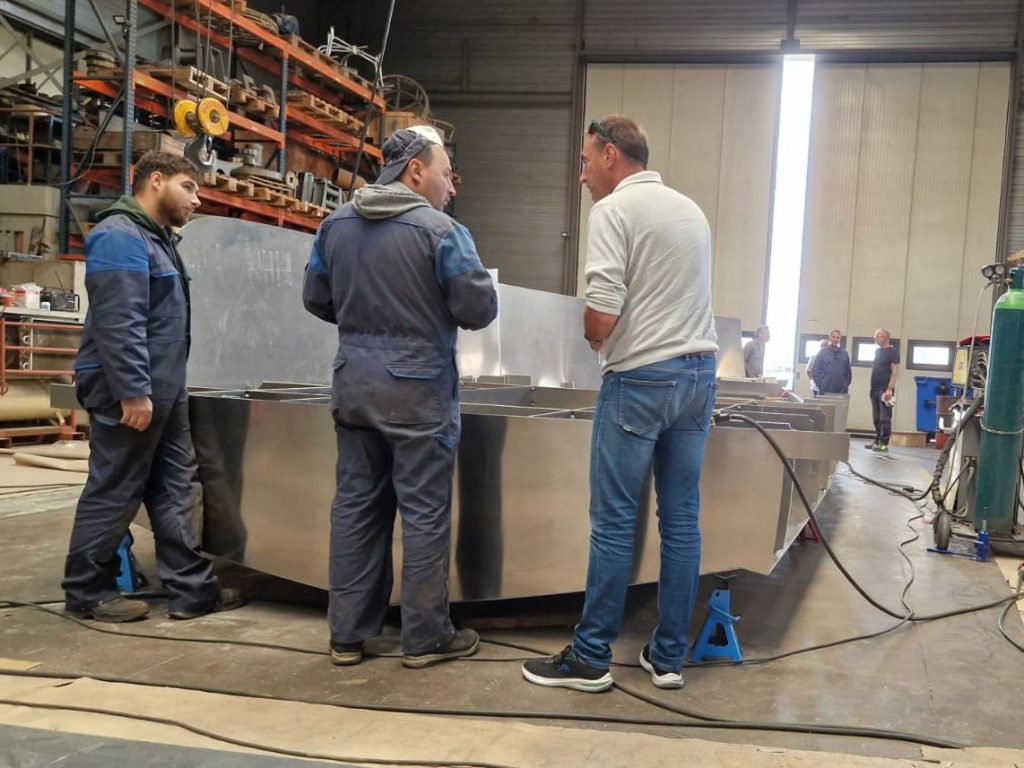
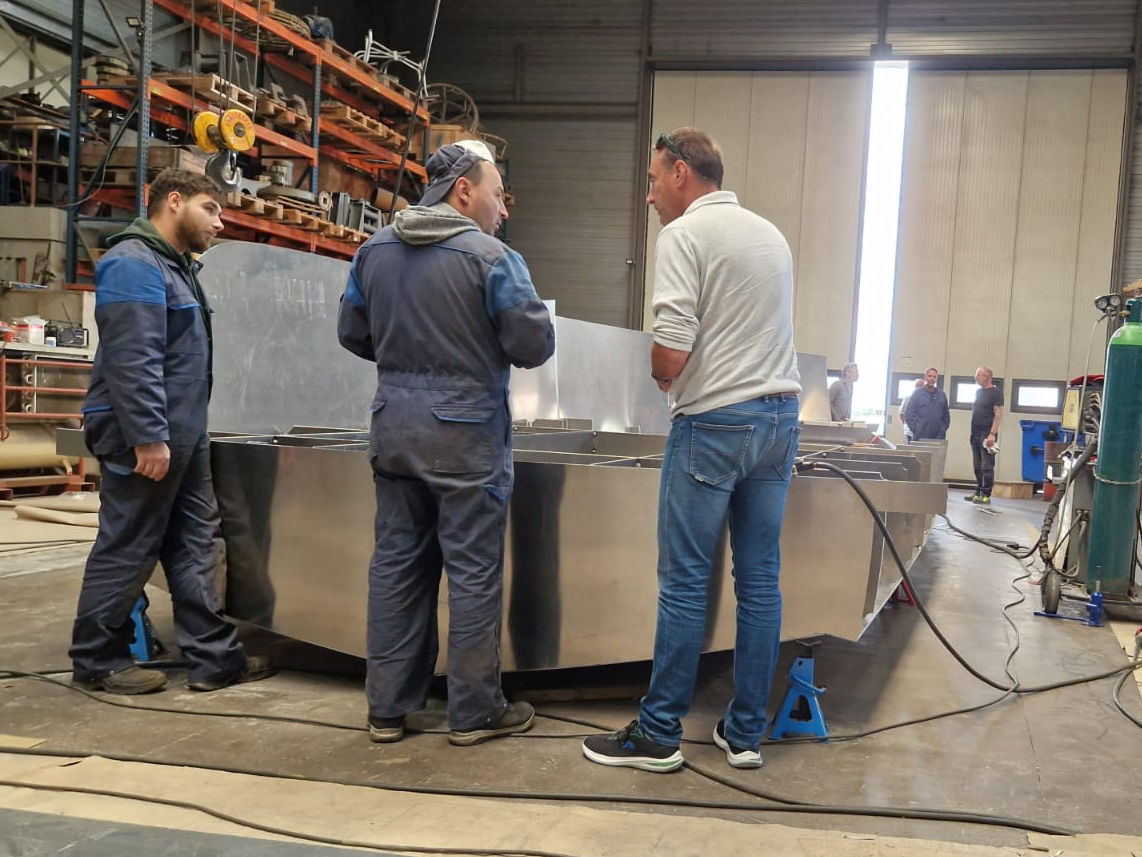
Many of the challenges facing today's maritime industry cannot be solved by one company, one discipline or one specialist working in isolation. Instead, they require naval architects, shipyards, equipment suppliers, operators, owners and researchers to work together from the very beginning of a project.
The greatest opportunity for innovation today isn't necessarily another breakthrough technology. It is improving how we collaborate.
Maritime Design Has Become Too Complex for Silos
Modern vessels are extraordinarily complex systems.
A single design decision influences numerous aspects of a project. A change to the hull affects resistance and fuel consumption. That influences engine selection, tank capacity, weight distribution, structural requirements and operating costs. Interior layouts impact stability. Sustainability goals influence materials, propulsion and maintenance strategies.
Every discipline is interconnected.
Traditionally, many projects still follow a sequential process. The owner develops requirements, the naval architect creates the design, engineers develop systems, suppliers are consulted later, and builders finally construct the vessel.
While this approach has worked for decades, it often means opportunities are discovered too late. Valuable knowledge remains locked within individual organisations instead of becoming part of the design process.
When collaboration starts late, innovation becomes expensive.
The Most Valuable Ideas Often Come from Unexpected Places
One of the greatest advantages of collaboration is the diversity of perspectives it brings.
Ship operators understand operational realities that designers rarely experience firsthand.
Builders know which details increase production time or introduce unnecessary cost.
Equipment manufacturers often possess specialist knowledge that can simplify installations or improve performance.
Researchers may have already solved similar technical challenges in entirely different sectors.
Even lessons from yacht design can inspire commercial vessels, while innovations in offshore or workboat sectors frequently find applications in leisure craft.
Innovation often happens when knowledge crosses boundaries.
The maritime industry contains enormous expertise. The challenge is connecting it effectively.
Collaboration Reduces Risk
Innovation is frequently associated with risk.
Owners worry about trying something new. Designers worry about unproven concepts. Shipyards worry about construction complexity.
Ironically, better collaboration often reduces these risks significantly.
When stakeholders are involved early, potential problems are identified before they become expensive redesigns. Different viewpoints expose hidden assumptions. Practical experience balances theoretical performance.
Instead of discovering issues during construction—or worse, during operation—they can be addressed while changes remain inexpensive.
Early collaboration does not slow projects down.
It prevents delays later.
Small Companies Can Drive Big Innovation
There is a common perception that major innovation comes from large corporations with significant research budgets.
In reality, many important maritime innovations originate from smaller specialist companies.
Independent naval architects, niche engineering firms and specialist suppliers often have one significant advantage.
They work across multiple sectors.
Instead of being limited by one company's internal practices, they continuously exchange ideas between projects, industries and clients. They recognise patterns that larger organisations may overlook.
Their role increasingly becomes that of a connector rather than simply a designer.
The value lies not only in creating solutions, but in bringing together the right expertise.
Digital Tools Help, but They Don't Replace Collaboration
Modern design software has transformed naval architecture.
Cloud-based collaboration, shared 3D models, CFD simulations, digital twins and AI-assisted optimisation all improve communication and accelerate design development.
But software alone does not create collaboration.
People do.
The best digital tools simply make it easier for experts to share ideas, evaluate alternatives and make informed decisions together.
Innovation still depends on open conversations, trust and a willingness to challenge assumptions.
Technology enables collaboration.
Culture determines whether it actually happens.
Collaboration Is Essential for Sustainable Shipping
The transition towards more sustainable shipping illustrates why collaboration has become essential.
Reducing emissions is not simply about selecting a different engine.
Hull optimisation, lightweight structures, propulsion efficiency, operational profiles, renewable energy integration and lifecycle maintenance all influence overall environmental performance.
No single specialist can optimise every aspect.
Success depends on bringing together experts from multiple disciplines to find the best overall solution rather than optimising individual components independently.
The same principle applies whether designing a high-performance yacht, a commercial workboat or a modern sailing cargo vessel.
The Future Belongs to Connected Teams
As maritime projects continue to increase in complexity, the role of the naval architect is evolving.
Today's designer is no longer simply responsible for producing drawings.
Increasingly, they become the facilitator who integrates knowledge from multiple disciplines into one coherent solution.
This means listening as much as designing.
Asking the right questions before proposing answers.
Creating an environment where every stakeholder contributes to a better vessel.
At Catran Naval Architects, collaboration is not viewed as an additional service—it is the foundation of every successful project. By combining independent naval architecture with a broad network of specialists, shipyards, suppliers and researchers, clients gain access to knowledge that extends far beyond a single design office.
Because the best vessels are rarely created by one brilliant idea.
They are created by many good ideas working together.
Frequently Asked Questions
1. Why is collaboration important in naval architecture?
Modern vessels are highly integrated systems where every design decision affects multiple aspects of performance, construction and operation. Early collaboration between naval architects, owners, shipyards, equipment suppliers and operators leads to better-informed decisions, reduces costly redesigns and results in more efficient, practical and innovative vessels.
2. How does collaboration improve maritime innovation?
Innovation rarely comes from technology alone. It happens when experts from different disciplines combine their knowledge to solve complex challenges. By involving all stakeholders early in the design process, new ideas can be evaluated from technical, operational and commercial perspectives, leading to solutions that are both innovative and practical.
3. How does Catran Naval Architects use collaboration in its projects?
Catran Naval Architects acts as an independent design partner, bringing together a trusted network of specialists, shipyards, researchers and equipment suppliers throughout the design process. This collaborative approach allows clients to benefit from a broader range of expertise, resulting in designs that are technically robust, commercially viable and tailored to their specific requirements.