

For decades, yacht design was driven by a relatively simple objective: go faster, further, and look better than the competition. While performance remains important, a noticeable shift is taking place throughout the maritime industry. Owners, builders, and designers are increasingly prioritizing efficiency, comfort, and sustainability alongside traditional performance targets.
At Catran Naval Architects, we see this trend extending across all vessel categories, from custom motor yachts and commercial vessels to innovative low-carbon transport solutions. The question is no longer simply "How fast can it go?" but rather "How efficiently can it operate while delivering the best possible experience on board?"
The Evolution of Performance
Historically, increasing speed was often achieved by installing larger engines and accepting higher fuel consumption. While effective, this approach comes with obvious drawbacks: increased operating costs, higher emissions, greater maintenance requirements, and reduced range.
Modern naval architecture takes a more sophisticated approach. Instead of relying solely on propulsion power, designers focus on optimizing the entire vessel. Hull geometry, weight distribution, appendage design, propulsion integration, and seakeeping characteristics all contribute to overall performance.
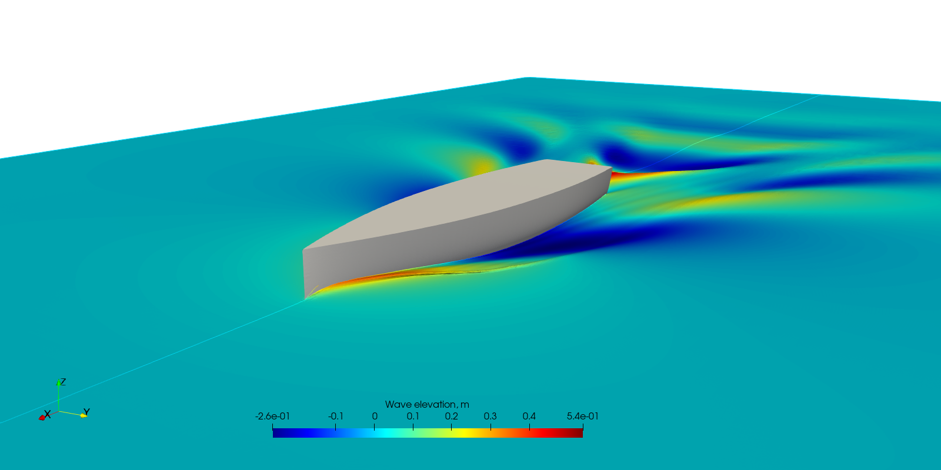
Advances in Computational Fluid Dynamics (CFD) have transformed how naval architects evaluate designs. Thousands of operating conditions can now be simulated before construction begins, allowing designers to reduce resistance, improve comfort, and optimize fuel consumption long before a vessel enters the water.
The result is a vessel that performs better not because it has more power, but because it uses available power more effectively.
Comfort as a Design Driver
One of the most significant changes in recent years is the growing importance of onboard comfort.
Owners increasingly value vessels that can maintain comfortable motion characteristics in varying sea conditions. Excessive pitching, rolling, and slamming can quickly diminish the enjoyment of a voyage, regardless of how impressive the vessel's top speed may be.
This focus has encouraged the development of more advanced hull forms, improved stabilization systems, and refined weight management strategies. Modern naval architecture seeks to reduce vessel motions before they occur rather than relying solely on mechanical stabilization systems to compensate for them later.
For long-distance cruising yachts and expedition vessels, comfort is often considered equally important as speed. A vessel that arrives slightly later but provides a smoother and more enjoyable passage is often the preferred choice.
Sustainability Through Better Design
Environmental considerations are also becoming a major influence on yacht design.
While alternative fuels and hybrid propulsion systems receive significant attention, one of the most effective methods of reducing environmental impact remains improving hull efficiency.
A vessel that requires less energy to move through the water will consume less fuel regardless of the propulsion technology used. This means that careful hydrodynamic design can provide immediate benefits while also preparing vessels for future propulsion technologies.
Across the industry, designers are exploring new hull forms, foil-assisted solutions, lightweight construction methods, and hybrid propulsion arrangements to reduce energy consumption without compromising capability.
The maritime sector is gradually adopting the same philosophy that transformed the automotive and aviation industries: reducing energy demand first, then optimizing how that energy is supplied.
Digital Tools are Changing the Design Process
The increasing availability of advanced simulation software has fundamentally changed naval architecture.
CFD analysis, structural modelling, and virtual prototyping allow designers to investigate numerous design alternatives before construction begins. Potential issues can be identified earlier, reducing both development risk and construction costs.
Digital twins and performance prediction models are also becoming increasingly valuable during vessel operation. Real-world operational data can be compared with design predictions, providing valuable feedback for future projects.
This continuous improvement cycle helps designers refine their understanding of vessel behaviour and develop more efficient solutions over time.
What This Means for Owners
For vessel owners, these developments offer several advantages.
Lower fuel consumption reduces operating costs and increases cruising range. Improved seakeeping characteristics enhance comfort and safety. Optimized layouts can improve functionality without increasing vessel size. Better engineering integration often simplifies maintenance and improves reliability.
Most importantly, efficiency-focused design tends to improve the overall ownership experience. Rather than chasing a single performance metric, modern naval architecture aims to balance all aspects of vessel operation.
A successful design is no longer defined solely by speed or appearance. It is defined by how effectively the vessel meets the owner's operational requirements while delivering comfort, efficiency, reliability, and long-term value.
Looking Ahead
As environmental regulations tighten and fuel costs remain a significant operational consideration, efficiency will continue to shape vessel design.
Future developments will likely include greater use of hybrid propulsion systems, foil-assisted technologies, advanced materials, and increasingly sophisticated digital design tools. However, the underlying principle will remain the same: achieving more with less.
At Catran Naval Architects, we believe the future of yacht design lies in intelligent engineering solutions that improve performance, reduce environmental impact, and enhance the owner's experience on the water.
In many ways, efficiency has become the new luxury.
Frequently Asked Questions
What is hydrodynamic efficiency?
Hydrodynamic efficiency refers to how effectively a vessel moves through the water. A more efficient hull requires less power and fuel to achieve the same speed.
Does an efficient yacht have to be slower?
Not at all. Many modern efficient hull forms can achieve similar or even better performance while using less power and fuel.
How does CFD help yacht design?
Computational Fluid Dynamics (CFD) allows designers to simulate water flow around a vessel, helping optimize hull shape, reduce resistance, and improve performance before construction begins.
Are hybrid propulsion systems the future?
Hybrid systems are becoming increasingly common, particularly in larger yachts. However, the greatest benefits are often achieved when efficient hull design and propulsion technologies are developed together.