

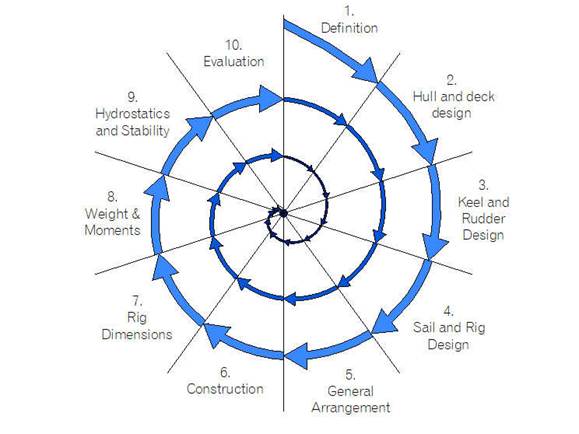
Designing a boat is a journey that takes an idea and gradually shapes it into something that can sail, work, and endure. Whether the goal is a sleek yacht or a practical sailing cargo vessel, the design process follows a clear progression. Each stage adds another layer of detail and certainty until the final product is ready for construction.
At Catran Naval Architects, we work closely with clients throughout this process—helping them clarify what they want, understand what is possible, and ultimately bring their vessel to life. Our approach reflects the way we see the craft of naval architecture: moving from vision to legacy through steady, thoughtful design work.
Stage 1: Concept Design – Laying the Foundation
Concept Design is where the project begins. At this point, everything starts with broad ideas: the purpose of the boat, key performance expectations, and initial layout preferences. It is an exploratory phase where options are tested and early decisions are made.
What happens during Concept Design:
- Client Requirements: Discussing goals, whether it is high-speed performance, long-range cruising, or the operational needs of a sailing cargo ship.
- Early Form Studies: Reviewing different hull shapes, superstructures, and layouts to find the right direction.
- Feasibility Checks: Running initial stability, displacement, and propulsion assessments to make sure the idea holds up.
- Regulatory Review: Confirming the concept can comply with relevant rules and safety standards.
Typical deliverables:
- Concept Design Report: A document summarizing the vessel’s main characteristics, general arrangement, and hull form.
- Data for Yard Estimates: Preliminary information that allows a shipyard to prepare an initial construction cost estimate.
Why this stage matters:
Concept Design sets the tone for the entire project. It ensures that the client’s aspirations are matched with practical engineering considerations from the start, creating a clear and realistic foundation for the next steps.
Stage 2: Basic Design – Refining the Vision
Once the concept is defined, the project moves into Basic Design. This is where the vessel becomes far more detailed and technically specific. Designs are refined to meet regulatory requirements, and the information becomes accurate enough to be reviewed by classification societies and priced more reliably by shipyards.
Key activities in Basic Design:
- Hull Lines and Structure: Refining the hull form and laying out the structural framework with attention to strength and hydrodynamic performance.
- Weight and Stability: Producing a weight estimate and preparing a preliminary stability booklet.
- System Design: Defining major systems, including propulsion, electrical, HVAC, and plumbing.
- Regulatory Compliance: Ensuring the design meets class and flag-state requirements.
- Performance Analysis: Running simulations and assessments to predict how the vessel will behave in various conditions.
Typical deliverables:
- Approval Documentation: Technical drawings and reports submitted to classification societies and regulatory authorities.
- Data for Fixed-Price Quotes: Sufficiently detailed information for shipyards to provide accurate, fixed-price construction bids.
Why this stage matters:
Basic Design transforms broad ideas into a technically sound set of plans. It gives shipyards and regulators a clear picture of the vessel and confirms the design is ready for engineering review and cost evaluation.
Stage 3: Detailed Design – Bringing the Boat to Life
Detailed Design is the final step before construction begins. This stage produces the drawings, specifications, and digital files that the shipyard will use during the build. Every detail—from plate thickness to cable routing—is defined and coordinated.
Key activities in Detailed Design:
- Construction Drawings: Final plans for the hull, structure, systems, and components.
- System Integration: Ensuring that all systems fit together smoothly and function as intended.
- Material Confirmation: Specifying exact construction materials and components.
- Quality Control Planning: Establishing inspection procedures to support efficient and accurate construction.
- Inclination Test Preparation: Once the vessel is nearly complete, preparing for the test that determines the final center of gravity for the stability booklet.
Typical deliverables:
- CNC Cutting Files: Digital data for cutting hull plates and structural elements.
- Construction Drawings: Detailed plans used directly during the build.
- System Spooling & Assembly Plans: Diagrams and assembly instructions for efficient onboard installation.
- Final Stability Booklet: Documentation required for final survey and vessel certification.
Why this stage matters:
Detailed Design ensures the shipyard has everything required to build the vessel accurately and efficiently. It closes the gap between engineering intent and real-world construction, ensuring that the final product performs as expected.
Conclusion
Boat design unfolds in three structured stages—Concept Design, Basic Design, and Detailed Design—each adding clarity, detail, and precision. Whether the goal is a refined yacht or a work-ready sailing cargo ship, this process ensures that the vessel is safe, functional, and aligned with the owner’s vision.
At Catran Naval Architects, our work reflects a simple guiding principle: Vision to Legacy. From early sketches to final construction documents, we help shape ideas into vessels built to endure, ready for the water and the years ahead.
Click HERE for a more in-depth explanation.